


MOROCCAN CUISINE
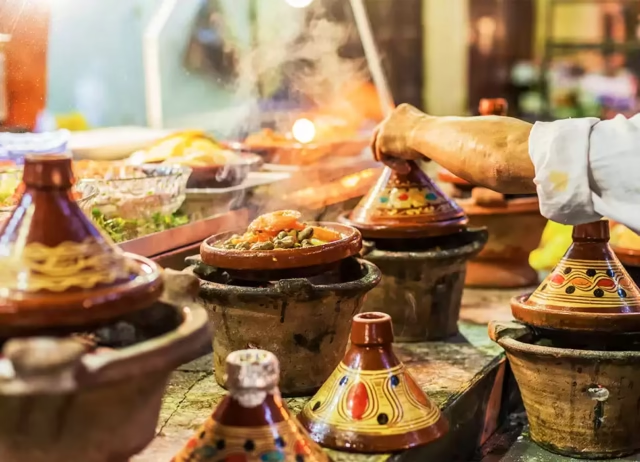
To immerse yourself in a country’s culture, you must sample the local gastronomy. And with Morocco, it will be no different.
Moroccan gastronomy is extremely refined, diverse, and uses many spices and dried fruits. Moroccan cuisine has interactions and influences from other cultures, such as Berber and Arab.
The taste is somewhat reminiscent of Indian food, but with a lighter intensity. This similarity is due to the use of some common spices, such as ginger, cumin, paprika, saffron, and cinnamon.
The hallmark of Moroccan gastronomy lies in the seasoning, which enhances the flavor, aroma, and colors of the dishes. Spices are used in abundance.
SPICES AND SEASONINGS
Before we talk about typical Moroccan dishes, we need to know a little more about their seasonings and spices.
The common seasoning base, composed of the trio of salt, garlic, and onion, also includes paprika, cumin, turmeric, ginger, cardamom, saffron, black pepper, cinnamon, nutmeg, anise, and cloves. The name of this mix of spices is Ras el hanout.
In the markets, you can find this mixture ready in powder form or to be ground at home. Additionally, fresh herbs such as coriander, oregano, parsley, fennel, mint, and bay leaf are added to the dishes.
Moroccan gastronomy is not spicy. But for those who like it, there is a chilli pepper sauce called harissa. It can be served separately. So, if you like a little heat, ask the waiter for it
TEAS
A highlight of the Moroccan meal is the tea. In Morocco, the consumption of alcoholic beverages is prohibited, so tea takes on the role of protagonist before and after meals.
The story goes that it was in the 18th century that the English left a shipment of tea that had sailed from Asia at Moroccan ports. From then on, tea became a habitual drink throughout the country.
The tradition involves green tea, fresh mint and verbena leaves, a lot of sugar, and a beautiful metal teapot. It is common to be offered tea everywhere. It is acceptable to ask for it without sugar, but refusing tea can be considered offensive, depending on the situation.
MAIN DISHES OF MOROCCAN CUISINE
TAGINE
Tagine is both the name of the ceramic pot and the dish. The tagine is a protein cooked together with spices, fruits, or vegetables. There are several variations of tagines. The most common are chicken with olives and preserved lemon, kafta with eggs, lamb with dried fruits and nuts, fish, and vegetables.
Traditionally, the tagine is cooked over embers, but many families make it on the stovetop. The idea is for the food to stay there for a few hours over low heat, as the ceramic container retains a lot of heat. They say that the shape of the clay “pot” prevents the tagine from losing its flavor.
It resists high temperatures, and its cone shape allows the steam to circulate and aids in cooking, making the meats very tender. The dish is served in this same small pot, still sizzling.
COUSCOUS
Moroccan Couscous is quite different from Brazilian cuscuz! Couscous is the name given to the semolina grains. Furthermore, it is one of the most time-consuming dishes to make, often used in special celebrations.
Moroccan Couscous is steam-cooked – in the couscoussier, not once or twice, but at least three times. Between these cooking moments, the grains are rubbed with hands and spiced water to activate more flavor. And it is important to say that the cooking steam does not come from water, but from a flavorful broth of vegetables and meat.
Therefore, Moroccan couscous is much more than a side dish; it is a main course, served with a stew of vegetables or meats.
HARIRA
Harira is a soup made with lentils and many spices. It is considered a traditional dish, especially during Ramadan (the month when Muslims fast until sunset). Moroccans usually break their fast with this dish at the end of the day.
Harira is served with bread, lemon, and very sweet dates.
TANGIA
Tangia is the name of the dish and also the pot in which it is prepared. Tangia is a beef stew prepared in an underground oven for about 7 to 8 hours. The result is a very tender and juicy meat that melts in your mouth. It is a delight for meat-eaters!
It is like a picnic food for Moroccans, as they often take the small pot to eat in parks and gatherings. Traditionally, Tangia is prepared by men.
BASTILLA
Bastilla is a dish that can be either a starter or a main course. It is a baked filo pastry, stuffed with chicken (which has been cooked for a few hours with many spices until very tender), eggs (scrambled with part of the chicken broth, until it turns almost into a farofa or crumb mixture), and almonds (cooked, peeled, and then fried and crushed with cinnamon and sugar).
It is also possible to find seafood bastilla in regions closer to the coast.
BRIWAT OR BRIOUAT
The briwat is an appetizer, snack, or even a dessert, made with the same pastry as the pastilla, filo, stuffed with cheese, chicken, meat, or vegetables, folded into a triangle shape and fried. It is served with sauce or dusted with sugar.
If it is for dessert, the filling will be almonds or peanut paste, and it is caramelized with honey and orange blossom water.
BROCHETTE OR KEBAB
Brochette or kebab are the names given to beef, lamb, or chicken skewers. They can be eaten plain or accompanied by bread, salad, couscous, and, of course, plenty of French fries.
MOROCCAN SALAD
The Moroccan salad can be a cold salad, with a mix of leaves, vegetables, and raw onion, with vinegar and olive oil. Or the more interesting hot salad, where bell peppers (taktouka) or eggplants (Zaalouk) are roasted directly over the fire and then peeled, mashed, and mixed with spices and tomato, creating a delicious paste to eat with bread.
BREADS
Bread is a companion to all meals in Morocco. And prepare to fall in love with Moroccan bread!
For the more traditional Moroccans who eat with their hands, bread also serves as a utensil to help during the meal.
Handmade, Moroccan bread usually contains only wheat flour, semolina, and water, and is baked in a flat shape in a clay oven.
At breakfast, it is also common to find two types of pancake-style bread. Baghrir is made with semolina flour, very thin, with a slightly spongy texture, usually served with a mixture of honey and butter or with jam. Or the harcha, also made with semolina, but with a fluffier dough, eaten with olive oil.
DESSERTS
Moroccan desserts follow Arab traditions: the sweets have fillings of almonds, walnuts, or pistachios, pastries soaked in honey, and touches of spices, such as rose water or orange blossom water.
There are also puddings and creams that mix these or other flavors, such as vanilla, date, plum, or mint. It is also common for a fresh seasonal fruit salad to be served as dessert.
Do you feel like savoring Moroccan dishes?
Travel safely and privately! Contact us, and we will be happy to answer your questions.